Metric Conversion

Electric Information

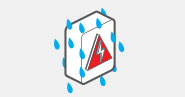
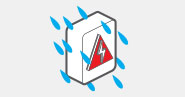
International Protection Standard

Metric Conversion

Feet to Meter Conversion
1 feet   =   0.30 meter
20 feet   =   6.10 meter
2 feet   =   0.61 meter
30 feet   =   9.14 meter
3 feet   =   0.91 meter
40 feet   =   12.19 meter
4 feet   =   1.22 meter
50 feet   =   15.24 meter
5 feet   =   1.52 meter
60 feet   =   18.29 meter
6 feet   =   1.83 meter
70 feet   =   21.34 meter
7 feet   =   2.13 meter
80 feet   =   24.38 meter
8 feet   =   2.44 meter
90 feet   =   27.43 meter
9 feet   =   2.74 meter
100 feet   =   30.48 meter
10 feet   =   3.05 meter
Inch to Centimeter Conversion
1 inch   =   2.54 centimeter
20 inch   =   50.8 centimeter
2 inch   =   5.08 centimeter
30 inch   =   76.2 centimeter
3 inch   =   7.64 centimeter
40 inch   =   101.6 centimeter
4 inch   =   10.16 centimeter
50 inch   =   127 centimeter
5 inch   =   12.7 centimeter
60 inch   =   152.4 centimeter
6 inch   =   15.24 centimeter
70 inch   =   177.8 centimeter
7 inch   =   17.78 centimeter
80 inch   =   203.2 centimeter
8 inch   =   20.32 centimeter
90 inch   =   228.6 centimeter
9 inch   =   22.86 centimeter
100 inch   =   254 centimeter
10 inch   =   25.4 centimeter
Yard to Meter Conversion
1 yard   =   0.91 meter
20 yard   =   18.29 meter
2 yard   =   1.83 meter
30 yard   =   27.43 meter
3 yard   =   2.74 meter
40 yard   =   36.58 meter
4 yard   =   3.66 meter
50 yard   =   45.72 meter
5 yard   =   4.57 meter
60 yard   =   54.86 meter
6 yard   =   5.49 meter
70 yard   =   64.00 meter
7 yard   =   6.40 meter
80 yard   =   73.15 meter
8 yard   =   7.32 meter
90 yard   =   82.30 meter
9 yard   =   8.23 meter
100 yard   =   91.44 meter
10 yard   =   9.14 meter
Mile to Kilometer Conversion
1 mile   =   1.61 kilometer
20 mile   =   32.19 kilometer
2 mile   =   3.22 kilometer
30 mile   =   48.28 kilometer
3 mile   =   4.83 kilometer
40 mile   =   64.37 kilometer
4 mile   =   6.44 kilometer
50 mile   =   80.47 kilometer
5 mile   =   8.05 kilometer
60 mile   =   96.56 kilometer
6 mile   =   9.66 kilometer
70 mile   =   112.65 kilometer
7 mile   =   11.27 kilometer
80 mile   =   128.75 kilometer
8 mile   =   12.87 kilometer
90 mile   =   144.84 kilometer
9 mile   =   14.48 kilometer
100 mile   =   160.93 kilometer
10 mile   =   16.09 kilometer
Electric Information

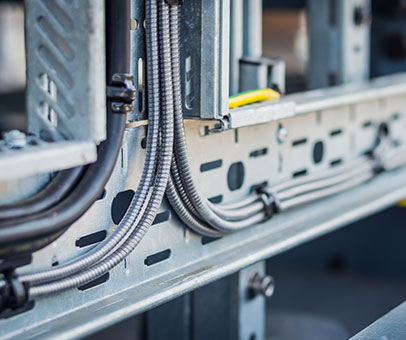
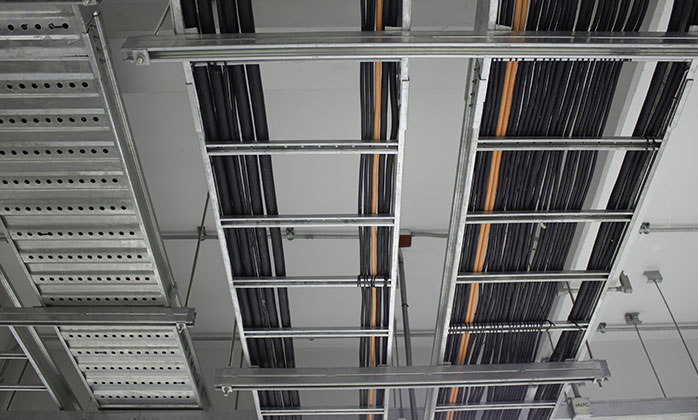
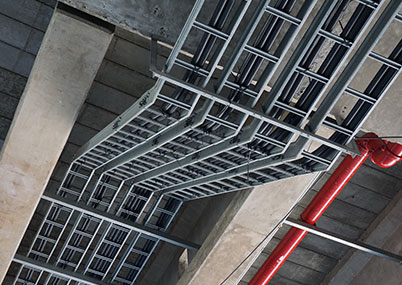
Cable Tray and Wire way are commonly used in electrical wiring in industrial applications. There are advantages to easy installation, convenience, speed and can put a lot of calls. Well ventilated Can use both electrical systems Medium, high and low pressure Made of thin steel sheet Can coat many different types to suit each type of cable tray, including Aluzinc, Electrogalvanized, Hot dip galvanized, Epoxy powder paint and Galvanized sheet. Good rust prevention. The general purpose can be divided as follows

Cable rail (Ladder type)
Made of hot dip galvanized thin steel sheet and sprayed with Epoxy powder paint. Suitable for hang up the main cable Large and outdoor work in all environments Examples of general information about this type of cable tray are
MATERIAL
STEEL :
Hot dip galvanized
Epoxy powder paint
Rung spacing 300 mm.
Width 200 - 1000 mm.
Length 3000 mm.
Sidereal height 100 mm.
Thickness 2.0 - 2.3 mm.

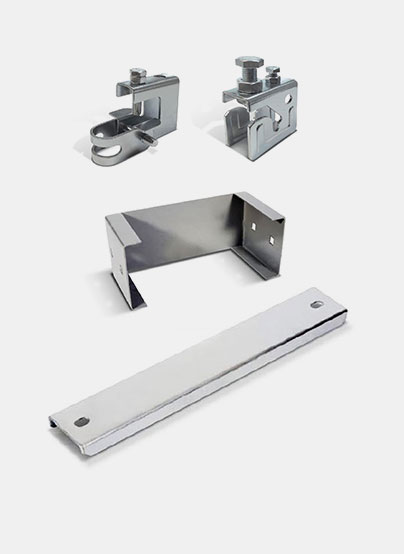
To install the Cable tray, appropriate joints and accessories are needed, as follows

Accessories
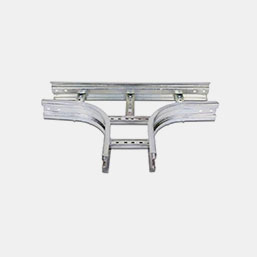
Horizontal Tee
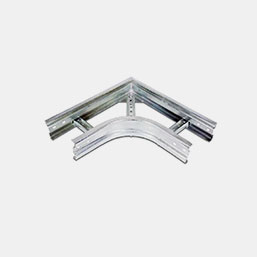
Horizontal Bend 90
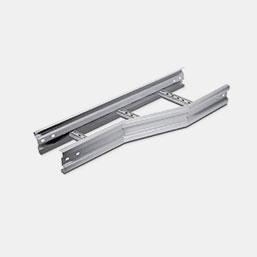
Horizontal Reduce
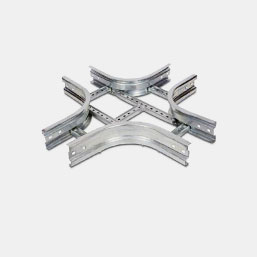
Horizontal Cross
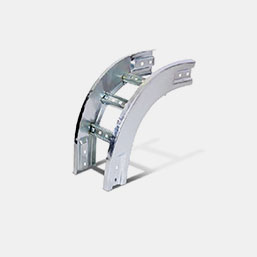
Vertical outside bend 90
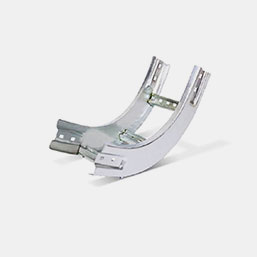
Vertical inside bend 90

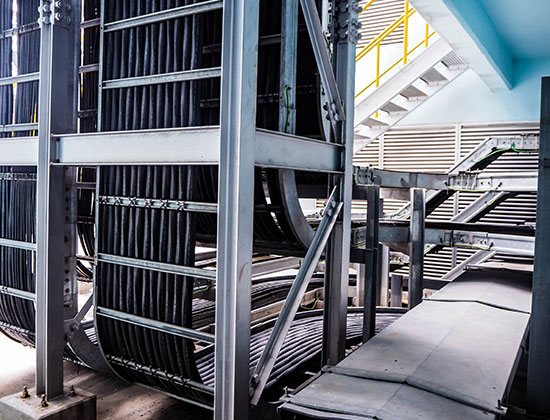
Example of a Cable tray installation

Circuit Breaker

Is a device that operates on and off electrical circuits without automation. But can open the circuit automatically If the current flows more than the specified value By preventing the equipment connected to the circuit breaker to be damaged by excess current Divided into many types

Working principle of circuit breaker

The operation of the circuit breaker When the current in the circuit is overload that the circuit breaker can accept, the contact of the circuit breaker will open the circuit with the following working principle

Thermal Trip. This type of work has an internal structure consisting of 2 bimetal metal plates which are made of metal That have different types of heat coefficients. When the current flows through the metal, the metal will bend the metal to bend and release. A mechanical device causes the circuit breaker to call a trip.

Magnetic Trip. This type of operation relies on the working principle of magnetic field power. When the circuit causes short-circuit or over-current Will cause a high intensity magnetic field and then release the mechanical device Causing the circuit breaker to break or open the circuit Which works like this, will break the circuit faster than the model

Thermal Trip Thermal-Magnetic Trip When the current in the circuit exceeds the contact rating of the circuit breaker, it will open the circuit. By relying on both the heat And the induction of the magnetic field helps to release the contact mechanism to open the circuit

Solid State Trip or Electronic Trip. This type of working principle uses electronic circuits together with circuit breakers. The trip current can be adjusted to work in various districts. The internal structure has a current transformer (CT: Current Transformer) inside the circuit breaker, which converts the current down and the microprocessor to analyze the current. If the current exceeds the limit Will order the circuit to be disconnected

Types of circuit breakers

Miniature Circuit Breakers (MCBs) are small-sized breakers often used in buildings. Can be used as a protection device with a load center or consumer cabinet Consumer unit has a short-circuit current rating. Is a circuit breaker that cannot adjust the circuit breaker setting. And most rely on thermal and magnetic release mechanisms. For choosing an MCB for placing in a consumer unit, we can install this protection device in 2 points, which is the main or main circuit breaker and the sub-circuit which The main breaker point must select the current from all loads. In most cases, it is approximately 100 A for MCB. The current selected depends on the load at each point of use, such as lighting loads, receptacle loads, refrigeration loads, and water heater loads. Basically, things to consider before choosing are the number of poles, the values In, Icu, and various standards, etc. In which the rated current is the maximum operating current that the circuit breaker can tolerate under normal operating conditions and environments. Icu is the maximum short circuit current that the circuit breaker can withstand and Also can break the circuit without damage to the circuit breaker itself, usually shown in the form of kA RMS

Residual Current Devices (RCDs) Automatic breakers that cut off electricity within a specified period of time. When the electric current flowing in and out Not equal That is, there is some electricity that is lost, such as leakage from grounded appliances. Or electric current leak through people who come into contact with equipment that has leakage electricity During normal use, there will be no electric leakage, so the leakage circuit breaker will not work, most will be installed in the consumer cabinet. Residential units Circuit breaker There may be other names such as residual current circuit breakers (RCD, RCBO, RCCB) or ground leakage circuit breakers (ELCB, GFCI) being used in conjunction with other types of circuit breakers such as brakes. Small child MCB or circuit breaker There are 3 types of MCCBs, but they are widely used: RCCB (Residual Current Circuit Breakers), RCBO (Residual Current Circuit Breakers with Overload protection) and ELCB (Earth Leakage Circuit Breaker).

Molded Case Circuit Breakers (MCCB) is a breaker that is considered popular for use in industrial plants and large buildings. With features that can withstand short circuit currents or kA values ​​and support currents that are higher than the circuit breaker (MCB) but less than the circuit breakers ACB, the current size will range from tens to thousands of amps

Air Circuit Breakers (ACB) are circuit breakers that protect the main cable. Commonly used with high-voltage (HVAC) structures, generally made of steel, with large and strong arcing chambers in order to be able to receive a large number of short-circuits. Most work principles are by using electronic devices in Detection and analysis of current to order to disconnect the circuit

The minimum size of the ground wire that moves to the electrical equipment or receptacle is according to the size of the overcurrent protection device as in the following table.

Minimum size of the grounding device for electrical equipment

Rated rating or set size of overcurrent protection device
(ampere)
Minimum size of a copper conductor ground wire
(Sq. Mm)
6 - 16 1.5
20 - 25 4
30 - 63 6
80 - 100 10
125 - 200 16
225 - 400 25
500 35
600 - 800 50
1,000 70
1,200 - 1,250 95
1,600 - 2,000 120
2,500 185
3,000 - 4,000 240
5,000 - 6,000 420

Example of electrical wire types with earth wires according to TIS 11-2531

Wire size with grounding
(Sq. Mm)
Ground wire using single wire (THW) green insulation
(Sq. Mm)
Power cable
ground wire
2.5 1.5 2.5
4.9 2.5 2.5
6.0 4.0 4.0
10.0 4.0 4.0
16.0 6.0 6.0
25.0 6.0 6.0
35.0 10.0 10.0


Note: In the case of a single ground wire For power lines from 2.5 sq. M. Down, it is recommended to use a ground wire equal to the power cable size, such as

Wire size Sq. Mm Grounding size Sq. Mm
2.5 2.5
1.5 1.5
1.0 1.0

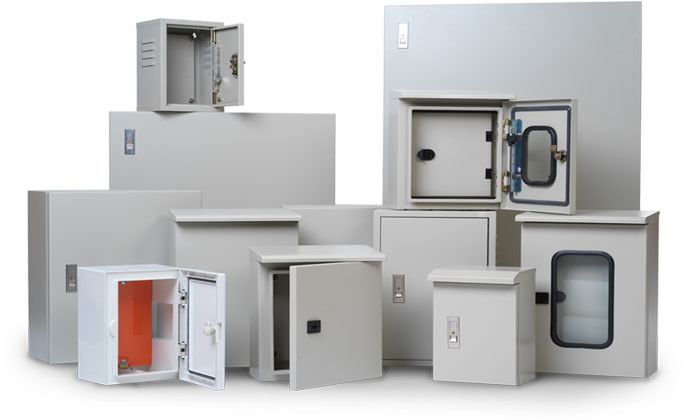
MDB. (Main distribution board)

Is the main electrical control cabinet with Main Circuit Breaker to cut the electrical circuit All of the buildings

SDB. (Sub distribution board)

Is a sub-control cabinet Distribute electricity to many PB or Load Center cabinets depending on the size of the building

PB (Panel board) or Load Center

Is a circuit breaker that controls the electricity distribution to various appliances. There are many sizes depending on the amount of Load.

International Protection Standard

IP standard, IP Code, IP Standard, full name International Protection Standard according to IEC 60529 or sometimes interpreted as Ingress Protection Rating, a standard that describes the level of mechanical casings and Electrical enclosures developed by the IEC (International Electrotechnical Commission) equivalent to European standards EN 60529.

To describe the level of protection, it is mainly represented by 2 numbers, IPxx. The first digit means Protection level of dust or accidental contact Which will have levels from 0-6, the second digit will mean levels Water protection Which will range from 0-9. For example, IP65 means to prevent dust and water from injecting 100% etc. The meaning of other IP codes is written in the table below.

IP Code Details
This table shows the sequence and necessities that must be specified in order to be considered a complete IP standard.
IP symbol Solid protection Liquid protection Impact resistance Other protection
IP Numbers 0-6 Numbers 0-9 Numbers 0-9 The character
Is required Is required Is required Deactivated No need to specify
Master number 1: solid protection
This table shows the level of protection against solids. These solids are defined as to prevent access (into the device) of dust or accidental contact only, not including solid impact. The impact resistance is described in the 3rd digit of the IP standard and has now been discontinued. There are 7 levels of solid protection from 0-6 as follows
degree illustration Details
0

Without any protection

1

Protect against solids that are 50 mm or more

For example, to prevent accidental contact with the device from hands or other parts of the body.

2

Protected against solids up to 12 mm in size

For example, to prevent accidental contact with the device from fingers or other tools. Of similar size

3

Protect against solids that are 2.5 mm or more

For example, to prevent accidental contact with the device from screwdrivers or other tools. Of similar size

4

Protects against solids from 1 mm or more

For example, to prevent accidental contact with the device from wires, wires, small screwdrivers, some insects, or other tools. Of similar size

5

Dust can be prevented, but there may be a small amount of dust that has been leaked into the system. The dust that has entered must not have any effect on the operation of the equipment.

For example, in most cases this IP standard is placed in portable meters or occasional devices, where dust can enter through the battery cover, but due to the short operating time, it is almost impossible to enter the dust. at all

6

Completely dustproof This standard was tested on areas with air and dust circulation for 8 hours.

For example, in most cases this IP standard will be in the measuring equipment or other equipment that is used in the area all the time.

Key number 2: Liquid protection
This table shows the level of protection against liquid, in which the liquid mentioned is only liquid, not other types of liquid such as oil, chemicals with high acidity or alkali etc. Levels from levels 0-9K as follows
degree illustration Details
0

Without any protection

1

Protect only water drops that fall vertically on the device.

Test by releasing water droplets vertically equal to 1 mm / min rainfall for 10 minutes

2

Protects against drops of water falling in an oblique direction around the device at an angle of up to 15 degrees from the vertical.

Tested by releasing water droplets in an amount equivalent to 3 mm / min rainfall for 2.5 minutes / side (10 minutes total). All 4 sides are tested on the left, right, front and back of the device.

3

Protects against water droplets that are slanted in an oblique direction around the device, at a maximum angle of 60 degrees.

Test by using spray nozzles to spray the device with a protective sheet for water. (To obtain the test angle) at a pressure of 50-150 kPa and a flow rate of 10 I / min for 1 minute per 1 m2 of equipment space, with a total test time of at least 5 minutes.

4

Protection against spray That can hit the device in every direction.

Test by Spray Nazzle spraying around the device at a pressure of 50-150 kPa and a flow rate of 10 I / min for 1 minute per 1 m2 of equipment space, with a total time of at least 5 tests. minute

5

Protects against water from injection in all directions.

Tested using a 6.3 mm nozzle around the device at a pressure of 30 kPa at a distance of 3 m and a flow rate of 12.5 I / min for 1 minute per 1 m2 of equipment. Resort all at least 3 minutes.

6

Prevent water from severe injection On the device from all directions.

Tested using a 12.5 mm nozzle, spraying around the device at a pressure of 100 kPa at a distance of 3 m and a flow rate of 100 I / min for 1 minute per 1 m2 of equipment space. At least 3 minutes

6K

Prevent water from high-pressure injection On the device from all directions.

Tested using a 6.3 mm nozzle around the device at a pressure of 1,000 kPa at a distance of 3 m and a flow rate of 75 I / min for 1 minute per 1 m2 of equipment. At least 3 minutes

7

Prevent water infiltration By soaking with the device in the water that has a maximum depth of 1 m for a maximum of 30 minutes.

In the case of a small device, the device is immersed in water with a depth of 1,000 mm, measured from the lowest point of the device to the surface. In the case of large devices, the device is immersed in water at a depth of 150 mm, measured from the highest point of the device to the water surface for a period of 30 minutes in both cases.

8

Prevent water infiltration From the permanent immersion of the device in the water

Testing due to different working depth of each equipment Testing of this IP standard will depend on the manufacturer directly, which will specify the maximum depth of use of the device.

9K

Prevent water from ultra-high pressure injection On the device from all directions at a maximum water temperature of 80 ° C

Test using the nozzle (Nazzle) to spray around the device in 4 positions, at an angle of 0, 30, 60, 90 degrees from the vertical of the device at a distance of 100-150 mm with a pressure of 8-10 MPa and a flow rate of 14- 16 I / min at water temperature 80 ° C for 30 seconds each position (total of 2 minutes)

* The standard with the symbol "K" is a standard established by ISO 20653, which is not in IEC 60529 except IPx9, which has the same test as IP69K.
The symbol Details
F Prevent oil
S Protecting high voltage devices
M The device is moving while testing the water protection.
S The device has no movement while testing the water protection.
W Resistant to natural weather conditions

Other protection

In addition to protection from dust and water, additional protection is also provided. Which other safeguards will use Alphabetical symbol after the IP number. Details are as follows:

Example IP standards

We may often encounter IP standards from all of the above number tables. There are a few that are used and popular to sell. The popular IP standards and are often seen are as follows.

IP54 is a standard that determines whether a device or device is Have the ability to prevent dust but may contain dust Slightly creep in The dust that has entered must not have any effect on the operation of the equipment and The ability to prevent water spray falling on the device from all directions.

IP65 is a standard that determines whether a device or tool is Have the ability to completely prevent dust And has the ability to prevent water from injecting the device from all directions

IP66 is a standard that determines whether a device or device is Has the ability to completely prevent dust and the ability to prevent water from violent injections on the device from all directions

IP66K is a standard that determines whether a device or device is Has the ability to completely prevent dust and the ability to prevent water from high-pressure injection at the device in all directions

IP67 is a standard that determines whether a device or device is Has the ability to completely prevent dust and has the ability to prevent water infiltration from immersing the device in water at a maximum depth of 1 m for a maximum period of 30 minutes.

IP68 is a standard that determines whether a device or device is Has the ability to completely prevent dust and the ability to prevent water infiltration from permanently immersing the device in the water

IP69K is a standard that determines whether a device or device is Has the ability to completely prevent dust and has the ability to prevent water from ultra-high pressure injection into the device from all directions At the highest water temperature 80 ° C

Call
MON - SAT
8:00 - 17:00 hrs.
+662 452 2499
Mail
ORDERS
SUPPORT
sales@msswitch.com